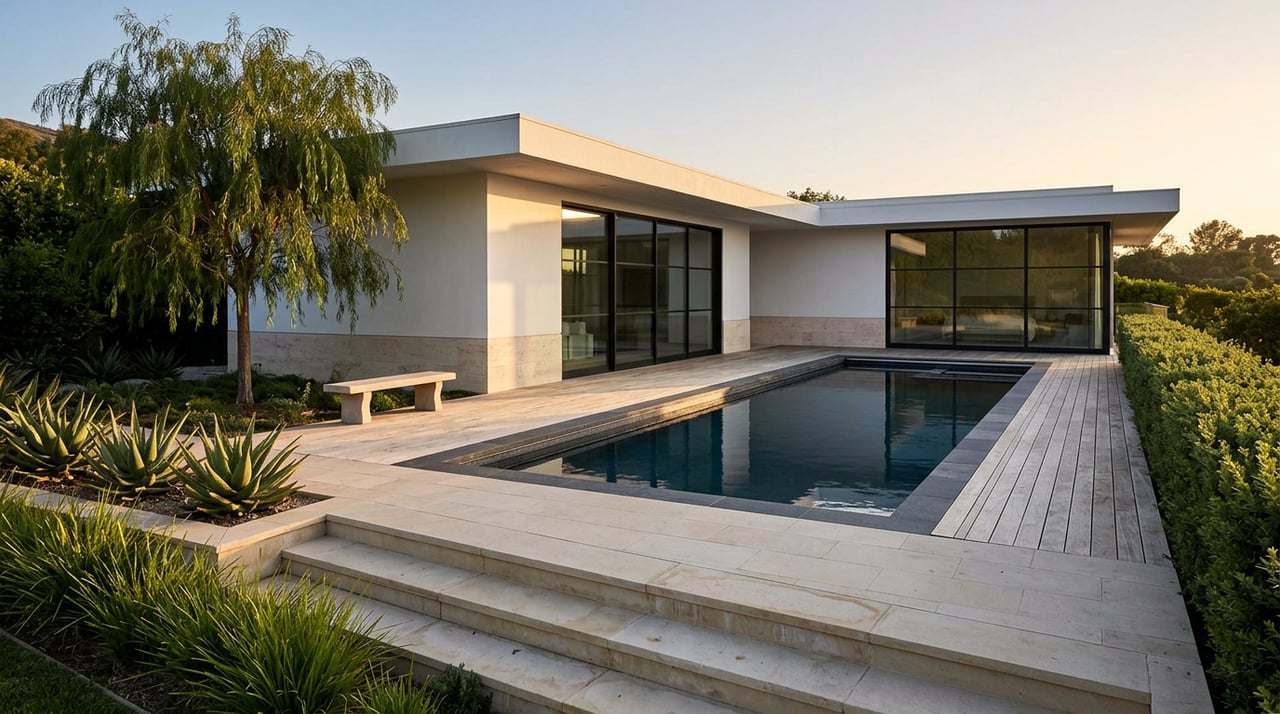
Drive Newport Coast Drive on any given evening and you will not find a town square. There is no Marine Avenue, no Balboa Pier, no strip of restaurants where neighbors bump into each other buying coffee. Newport Coast was built as a collection of private villages, gated communities, and golf frontage stitched together by a handful of arterial roads. It was designed for privacy, not for the kind of accidental civic life that happens on a sidewalk.
Which raises a real question for anyone who actually lives here: where do you go to be around other people from your own neighborhood, without driving somewhere else to do it?
Increasingly, the answer is the state park at the bottom of the hill.
The Community Center That Tops Out at Fifty
Newport Coast does have an official gathering place. The Newport Coast Community Center sits at 6401 San Joaquin Hills Road and offers karate, basketball, gymnastics, pickleball, and a rotating slate of camps. Its largest room, the Newport Coast and Willinger space, holds 50 people banquet-style. The smaller Newport Ridge and Pelican Room down the hall holds 24. It closes at 4:30 on Fridays and doesn't open at all on weekends.
That is a rec center, and a useful one. It is not a place where a neighborhood builds a shared calendar.
Crystal Cove State Park, three minutes down Pacific Coast Highway, is doing something different. Through its nonprofit partner, Crystal Cove Conservancy, the park has spent the past several years assembling a recurring public program that functions less like a visitor attraction and more like the civic infrastructure Newport Coast never built for itself. It runs on a scale the community center physically cannot match: a 2,791-acre park anchored by a 12.3-acre Historic District of 46 vintage cottages, open to anyone, most of it free or close to it.
What Just Happened This Month
The clearest evidence arrived earlier in September. Creative Currents: The Art of Preservation ran September 10 through 12 at the Historic District, and it was the Conservancy's first attempt at a multi-day arts weekend rather than a single class or lecture. A members-only evening opened the event with painter Quin Cooney giving a live demonstration paired with conservation interpretation from Conservancy staff. The following days brought a guided watercolor session with local artist Chapman Hamborg, a field sketching workshop led by LOCA teaching artist Liz McGhee that paired art instruction with a talk on ocean plastics from a Conservancy conservation biologist, and a beachside watercolor session with Jessica Beck, an emeritus fine arts instructor at Saddleback College. An Art & Artisan Bazaar ran alongside it, with local painters, potters, and jewelers selling directly out of the Historic District.
None of that required a ticket to a museum forty minutes away. It happened inside walking distance of Newport Coast, staffed by people whose names show up on the Conservancy's own event pages, not a marketing calendar.
The Recurring Lineup
Creative Currents was the debut event, but it sits on top of a backbone that already runs every month. Here is what actually repeats:
| Program | Frequency | What it is |
|---|---|---|
| Stewardship Saturdays | Second Saturday of every month | Free, registration required. Volunteers plant natives and work on conservation projects inside the park. |
| Discovery 101 series | Ongoing, rotating topics | Beginner-level classes in birding, tidepooling, nature photography, hiking, and backpacking. |
| Family Art Days | Every Wednesday | Drop-in art and science activities in the Education Commons, aimed at kids and families. |
| Cove Talks | Periodic evenings | A speaker series bringing in scientists and conservation leaders, including a May 2026 talk from Jason Bell, an Executive Vice President at the International Fund for Animal Welfare. |
| Historic District walking tours | Recurring, some tied to heritage months | Docent-led history of the cottages, including a tour led by State Parks Historian Diana Chang during AAPI Heritage Month. |
That is not a beach with a snack bar attached. It is a monthly cycle of lectures, classes, and volunteer mornings that a resident can plan a season around, the way you would plan around a farmers market or a church calendar in a neighborhood that has one.
The Nights the Fish Don't Show
Not every program on that calendar is guaranteed to happen, and that turns out to be part of what makes it feel local rather than manufactured. The Grunion Run, a nighttime program where Conservancy staff lead visitors down to the sand to watch small silver fish spawn on the shoreline, depends entirely on the grunion actually running. One scheduled session earlier this year was canceled outright when conditions didn't cooperate.
That is the kind of detail a resident learns by going more than once, not by reading a single events roundup. It also means the calendar rewards people who treat it as an ongoing habit rather than a one-time outing before a trip out of town.
Getting There Without Losing an Afternoon to Parking
The park's geography is confusing enough that it is worth laying out plainly, because the entrance you choose determines what you actually get to see.
- Los Trancos lot, on the inland side of PCH at the Crystal Cove/Los Trancos light, is the only way in for day visitors headed to the Historic District. There is no day-use parking on the beach side. A shuttle runs from the lot daily from 7 a.m. to 10 p.m. for $2 each way, and it's free for visitors with disabilities.
- Reef Point, off PCH and Reef Point Drive, has 162 spots in its upper lot and puts you closer to the bluff-top trails and tide pools north of the Historic District.
- Pelican Point, at the intersection of PCH and Newport Drive, is a straight shot to the beach without the walk through the Los Trancos tunnel.
The backcountry side of the park, the 18 miles of trail running through Moro Canyon and up onto the ridgelines, is a separate trip from the cottages and the beach. Winter brings periodic closures for trail repairs, so anyone planning a canyon hike between now and spring should expect the occasional detour.
One Date Worth Blocking Off
If there's a single fixed point to put on a calendar now, it's December 12. The Crystal Cove Trail Run returns to the park's El Moro entrance that Saturday with a 15k, a 6k, and a 1k kids' race, a $2,000 prize purse, complimentary breakfast tacos, a beer garden for adults, and post-race sport massages. It's the kind of event that pulls people out of their own villages and onto the same fire road for a morning, which is precisely the thing a neighborhood without a downtown otherwise struggles to produce.
As Crystal Cove Conservancy's own president put it, the mission is to make the park
"a living classroom, a creative refuge, and a gathering space for community."
That line was written to describe the park's purpose. For Newport Coast specifically, it also happens to describe a gap in the neighborhood's own design that the park has quietly filled.
The Actual Takeaway
Newport Coast wasn't built with a village center, and nothing about its master plan suggests one is coming. What has happened instead is that the state park sharing its zip code has become the place where the calendar actually lives: a monthly volunteer morning, a rotating lecture series, a first-ever arts weekend that drew working artists and conservation biologists into the same room, and one big shared race in December. None of it requires HOA dues or a reservation six months out. It just requires knowing it's there.
If you're already living in Newport Coast, that's worth knowing simply because it changes how you use a Saturday. If you're the kind of person who tracks these details because you're thinking about the neighborhood more permanently, that same texture, the way a place fills in the gaps its own planning left behind, is exactly the sort of thing worth understanding before you commit to a street, a village, or a view.
For anyone weighing a move to Newport Coast, or curious what a specific street or villa community is actually like day to day, Aymi Lau works this stretch of coastline directly and can walk you through it in plain terms.
