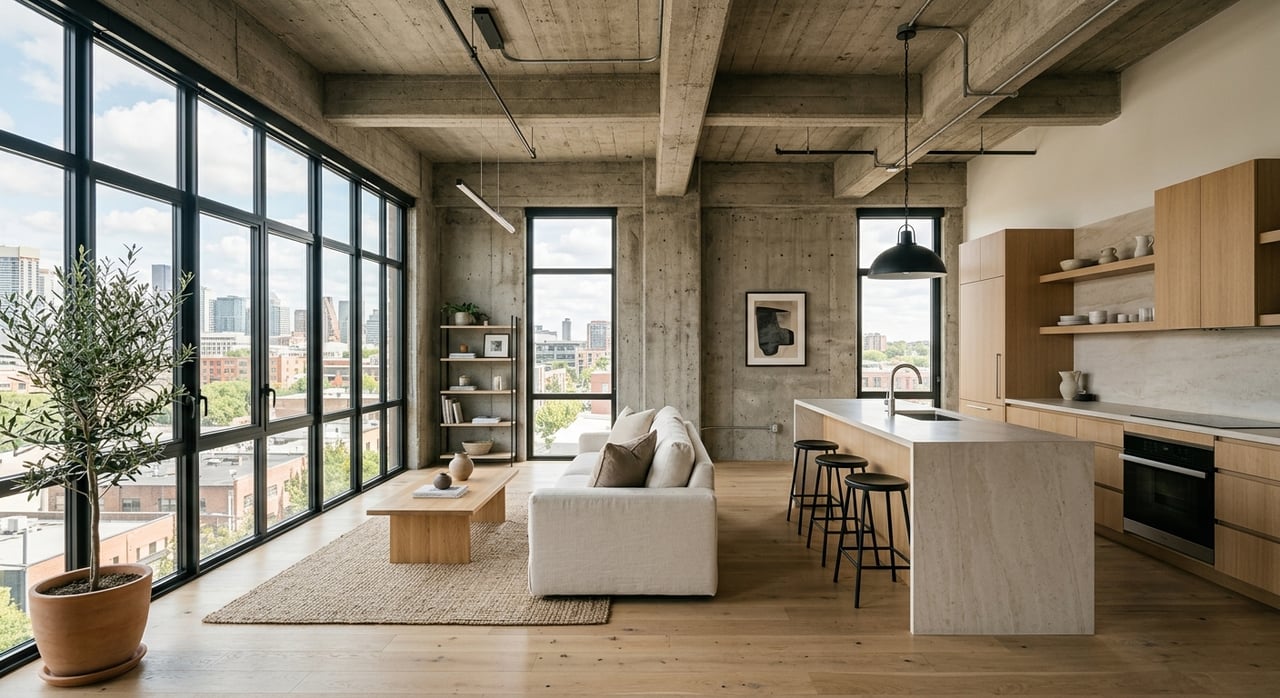
If you are deciding between a condo and a loft in Downtown Los Angeles, you are not just choosing a floor plan. You are also choosing a building style, an HOA structure, and a micro-neighborhood that can shape your daily routine. The good news is that once you understand how DTLA housing really works, your decision becomes much clearer. Let’s dive in.
Condo vs. Loft in DTLA
In Downtown Los Angeles, the condo-versus-loft question is more nuanced than it sounds. A condo usually refers to an ownership structure inside a common interest development, while a loft is more about the layout and feel of the home.
That distinction matters in DTLA because many lofts are still part of HOA-governed buildings. In other words, choosing a loft does not automatically mean fewer rules, lower oversight, or less shared maintenance. In many cases, the real choice is character versus predictability.
DTLA also has a wide range of subdistricts packed into about six square miles. Historic Core, Arts District, South Park, Bunker Hill, Little Tokyo, Chinatown, and the Fashion District each offer a different living experience. That is why your best fit often comes down to both the unit type and the part of downtown that feels right for you.
Where Condos and Lofts Show Up
Historic Core
Historic Core is one of the strongest matches for buyers who want a classic loft feel. The area is known for adaptive reuse, with older commercial buildings and former bank buildings converted into residential spaces.
If you are drawn to original architectural details, older facades, and a more storied downtown atmosphere, this area may stand out. It tends to appeal to buyers who want a home with visible character rather than a highly standardized tower layout.
Arts District
The Arts District gives you one of the clearest mixes of loft and condo living in DTLA. The neighborhood includes live-work lofts, industrial-style spaces, and upscale condos, with many buildings tied to early 20th-century warehouses and former factories.
This makes it a strong option if you want flexibility. You may find a loft with open space and industrial details, or a condo with a more conventional finish level, all within the same broader district.
South Park
South Park is often a better fit if you picture modern tower living. The neighborhood is known for gleaming residential towers, retail, local businesses, public art, and proximity to major entertainment destinations like L.A. Live and Crypto.com Arena.
If you want a more event-oriented, car-light lifestyle, South Park often checks that box. It is especially relevant for buyers who prefer polished building environments over conversion-style loft living.
Bunker Hill
Bunker Hill tends to reflect the skyline side of DTLA. It is closely tied to major cultural destinations and a more polished high-rise setting.
If you are leaning toward a condo, Bunker Hill can serve as a useful contrast to the warehouse and adaptive-reuse feel you may find elsewhere downtown. It generally signals urban tower living more than classic industrial loft character.
Pros of Condo Living in DTLA
More Predictable Building Structure
For many buyers, condos feel more straightforward. In DTLA, condos are often part of common interest developments where HOA assessments help fund day-to-day operations and long-term reserve needs.
That structure can create a stronger sense of predictability. If you value a more organized building environment, condo living may feel easier to understand and manage over time.
Clearer Rules and Responsibilities
Another benefit of condo living is the formal framework around building use and ownership. CC&Rs often spell out rules related to things like alterations, balcony use, parking, and common-area responsibilities.
For some buyers, that is a plus. Clear guidelines can reduce uncertainty and help you know what is expected before you buy.
Strong Fit for Tower Lifestyle
In neighborhoods like South Park and parts of Bunker Hill, condos often align with a more standardized urban living experience. You may prefer this if you want a layout that feels more conventional and a building setup that is geared toward shared services and professional management.
That can be especially helpful if you are comparing a newer tower to an older conversion building. The day-to-day ownership experience may feel more consistent.
Cons of Condo Living in DTLA
HOA Dues Add to Ownership Cost
One of the biggest tradeoffs with condo ownership is cost beyond the mortgage. Monthly dues are part of the package, and those dues help cover common-area operations and reserve funding.
You also need to be aware that special assessments can happen. If a building faces major repairs or unexpected expenses, owners may be asked to contribute beyond regular dues.
More Documents to Review
Condos can require more homework before you buy. You should expect to review CC&Rs, association budgets, reserve information, and board minutes as part of your due diligence.
That is not necessarily a drawback if you like clarity. Still, it does mean condo ownership often comes with more formal governance and more paperwork to evaluate upfront.
Less Flexibility for Changes
If personalizing your space is a top priority, condo rules may feel limiting. Exterior changes and many common-area matters are controlled by the association.
That can protect the building overall, but it may also reduce flexibility. If you want a more free-form environment, this is worth considering carefully.
Pros of Loft Living in DTLA
More Character and History
Lofts are often where DTLA’s history shows up most clearly. Many are tied to adaptive reuse projects in older commercial buildings, warehouses, banks, and former factories.
That gives loft living a strong sense of place. If you want your home to feel connected to downtown’s architectural story, a loft may offer a depth of character that is hard to replicate in a newer tower.
Flexible, Less Standardized Layouts
One reason buyers love lofts is that they rarely feel cookie-cutter. Because many of these buildings were not originally designed as conventional housing, the layouts can feel more open and less standardized.
That can be a major plus if you want a space that feels creative and adaptable. It may also suit buyers who work from home and want more visual openness.
Strong Connection to DTLA Identity
In places like the Arts District and Historic Core, lofts often reflect the local environment in a very direct way. The building materials, scale, and floor plans can feel closely tied to the neighborhood around them.
If you are choosing downtown for its energy and texture, a loft may feel like the most immersive way to live there. For many buyers, that emotional connection is a real advantage.
Cons of Loft Living in DTLA
Older Buildings Need Closer Review
Character often comes with more complexity. In older loft buildings, it is especially important to review the association budget, reserve account, and maintenance planning.
That does not mean a loft is a risky choice. It simply means you should look closely at how the building is being maintained and whether long-term repairs are being planned responsibly.
HOA Rules Still Apply
A common misconception is that loft living means fewer rules. In DTLA, many lofts are still part of HOA-governed common interest developments, so the same basic need to review CC&Rs and assessments still applies.
That is why it helps to separate the feeling of the unit from the governance of the building. A loft may look more relaxed, but the ownership structure can still be quite formal.
Tradeoffs in Services and Convenience
Some buyers are happy to trade a more polished building-services experience for location and character. Others want a building that feels more streamlined and predictable day to day.
That difference often shows up in the condo-versus-loft choice. If building services, amenities, or standardized upkeep matter most to you, a condo may feel like the easier fit.
How to Choose the Right Fit
The best option depends on how you actually want to live. If you picture modern tower living, clearer rules, and a more structured ownership experience, a condo may be the better match.
If you care more about historic character, open layouts, and a home that feels less standardized, a loft may be worth the added complexity. In DTLA, neither choice is inherently better. The right answer is the one that lines up with your routine, priorities, and comfort level with the building itself.
Transit access is also part of the equation. DTLA is walkable and served by numerous Metro stations, which supports a lifestyle with less dependence on driving, especially in denser core neighborhoods.
Questions to Ask When Touring
Before you make an offer on a DTLA condo or loft, ask practical questions that help you understand both the unit and the building.
- Is this building a common interest development?
- What do the CC&Rs allow or restrict?
- What do monthly HOA dues cover?
- How strong is the reserve fund?
- Are any special assessments planned or being discussed?
- What is the owner responsible for versus the association?
- Do recent board minutes show deferred maintenance or major repair planning?
- If this is a Historic Core or Arts District property, what was original and what was renovated during adaptive reuse?
- If this is a South Park or Bunker Hill tower, how are amenities, access, security, and event-night traffic handled?
- If this is a loft, how much privacy and separation does the layout actually provide?
These questions can help you move beyond the marketing language and evaluate the ownership experience more clearly.
The Bottom Line on DTLA Living
Downtown Los Angeles is not one uniform market, and that is exactly what makes this choice so personal. Historic Core and the Arts District lean toward adaptive-reuse loft culture, while South Park and Bunker Hill often point buyers toward tower living.
If you focus on the building’s HOA structure, the unit’s layout, and the neighborhood setting together, you will make a more confident decision. If you want thoughtful guidance as you weigh your options in Southern California real estate, Aymi Lau offers the kind of hands-on, detail-focused support that helps you move forward with clarity.
FAQs
What is the difference between a condo and a loft in Downtown Los Angeles?
- In DTLA, a condo usually refers to an ownership structure within an HOA-governed common interest development, while a loft refers more to the layout and style of the home, often with open space and adaptive-reuse character.
Which DTLA neighborhoods are best known for loft living?
- Historic Core and the Arts District are the clearest examples of DTLA areas associated with loft living, especially in adaptive-reuse buildings and former commercial or industrial spaces.
Which DTLA neighborhoods are more associated with condo towers?
- South Park and Bunker Hill are more closely associated with polished high-rise condo living and a more conventional tower lifestyle.
Do DTLA lofts usually have HOA fees and rules?
- Yes, many DTLA lofts are still part of HOA-governed common interest developments, so buyers should review dues, CC&Rs, reserve funding, and association documents just as carefully as they would with a condo.
What should you ask before buying a condo or loft in DTLA?
- You should ask about HOA dues, reserve funds, special assessments, CC&R restrictions, owner versus association responsibilities, recent board minutes, and how the building handles maintenance, access, and shared amenities.
Is DTLA a good fit for car-light living?
- DTLA is considered walkable and is served by numerous Metro stations and rail lines, which can support a lifestyle with less dependence on driving, especially in the denser core neighborhoods.
